
We’ve been raising and breeding Berkshire pigs on our lifestyle block in New Zealand for the past six years, supplying beautiful Berkshire piglets to families and small farms in our local community and keeping a few for our own freezer along the way.
What started with a small breeding herd as a side hustle and way to fill our freezer, has turned into six years of learning about pig breeding, farrowing, feeding, paddock rotation and, perhaps most importantly, just how much personality pigs can have!
Berkshires have become a huge part of our lifestyle block, and while we certainly don’t consider ourselves experts, six years of raising them has taught us a lot. So if you’re considering raising Berkshire pigs in New Zealand, here’s what our experience has looked like.


Why We Chose Berkshire Pigs
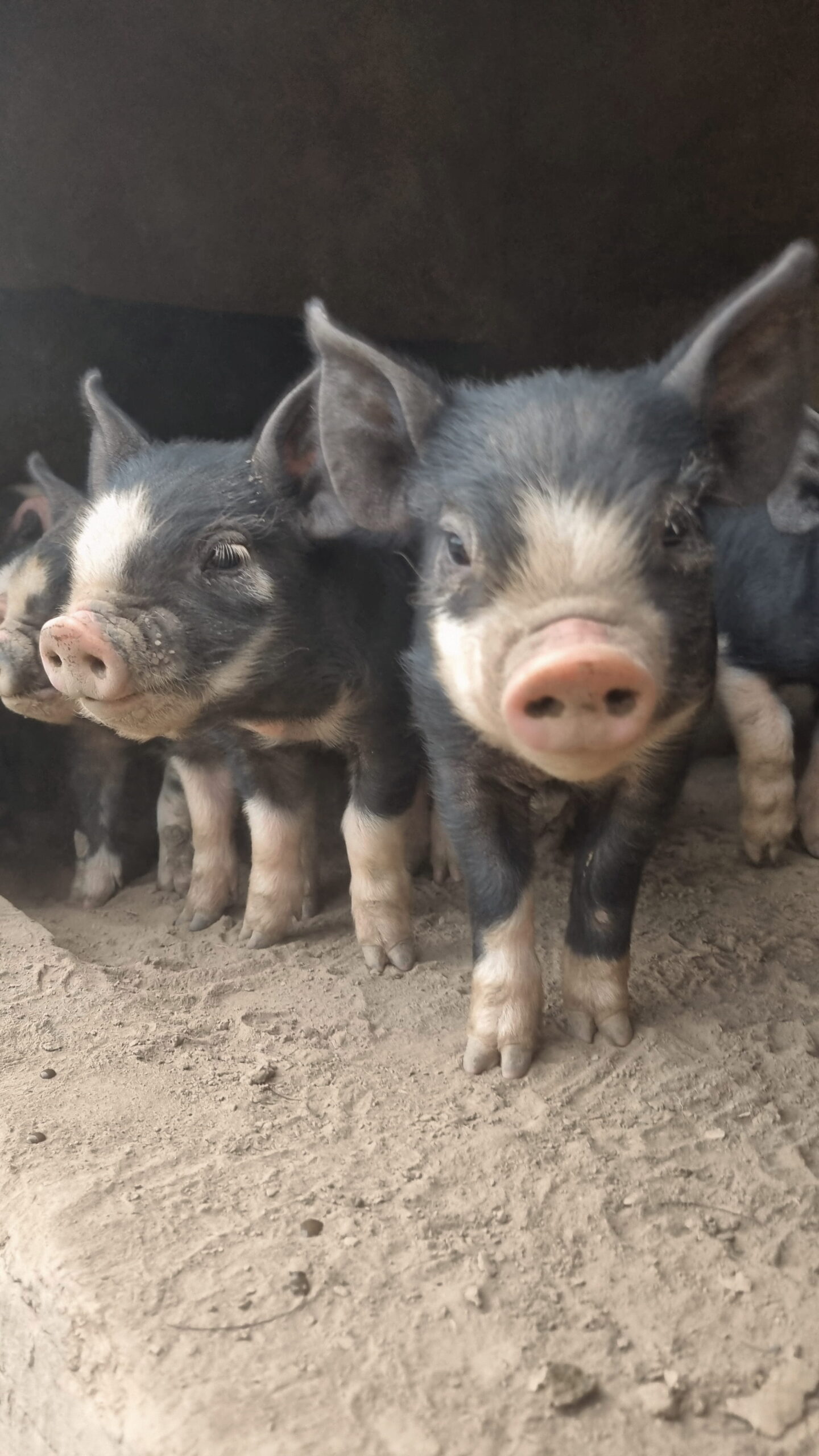
The Berkshire pig is a British heritage breed known for its distinctive black coat with white markings and its high-quality pork. Berkshire pork is particularly prized for its flavour, tenderness and marbling.
For us, though, it wasn’t just about the meat.
We love the temperament of our Berkshires. They have generally been incredibly friendly, calm and easy for us to handle, even when they have piglets at their feet. Our two daughters have always been able to pat them and feed them by hand, and even our boars have never been aggressive towards us.
That makes a huge difference when you’re raising pigs as part of a family lifestyle block.
We also love that Berkshires are good grazers. We rotate our pigs through a few smaller paddocks and make the most of their ability to graze which helps supplement the feed bill.
And, of course, there’s the pork.
We think Berkshire pork is absolutely beautiful. We normally keep two or three piglets each year for our own freezer, and the meat is one of the things that keeps us coming back to the breed.

Our Berkshire Breeding Herd
At the peak of our Berkshire breeding days, we had four sows and one boar.
Our girls included Maggie and Beth, Blackie and Dora, and later we kept one of Maggie’s daughters, Shiloh, to continue our breeding line.
Sadly, raising livestock also means dealing with deadstock. We lost one of our sows, Dora, unexpectedly when she was two, maybe three, years old. One morning we went out for our usual checks and found that she had died overnight in her hut. We still don’t know exactly what happened, and losing her was heartbreaking.
We also sold Blackie in her prime breeding era, and she went on to a North Canterbury farm where she even ended up starring in an episode of Country Calendar with her latest litter of piglets! Not a bad second act for a Berkshire pig.
Eventually we moved our original boar on and brought in another young boar. We had actually raised him from a weaner, so there was a bit of waiting involved while he grew old enough to breed.
That meant we missed a few breeding cycles with Maggie and Beth, but in hindsight it worked out well. By the time Shiloh, Maggie’s daughter, and our new boar were old enough to breed, we had a nice continuation of our herd without rushing the process.

How Often Do Berkshire Pigs Have Piglets?
In our experience, we generally aimed for two litters per sow each year.
One of the handy things about breeding pigs is the famous 3-3-3 rule: approximately three months, three weeks and three days of gestation.
It is remarkably close to the mark!
Because the gestation period is so predictable, you can usually get a pretty good idea of when your piglets are going to arrive. Depending on when you catch the pigs shagging, that is.
If we have a litter of piglets closer to the start of the new year, we can usually expect a little Christmas time bonus litter.
And there is nothing quite like discovering you’ve got a whole lot of new piglets to add to the Christmas chaos!
How Many Piglets Does a Berkshire Sow Have?
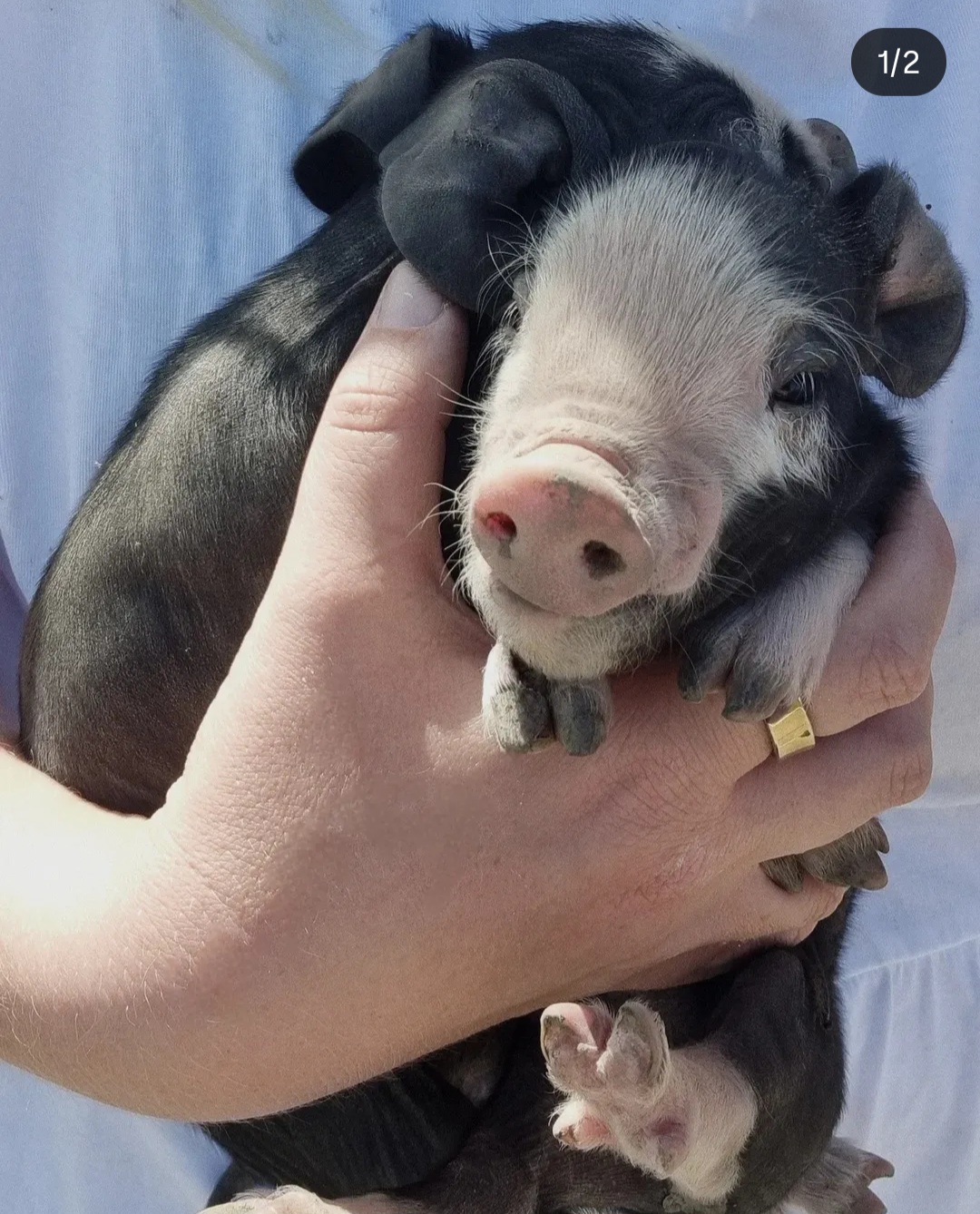
Litter size can vary considerably, and we’ve definitely noticed a difference as our girls have got older.
When Maggie, Beth and Shiloh were around two to three years old and had already had a couple of litters, we had some lovely-sized litters.
Maggie once had 14 piglets in a single litter!
Fourteen is a lot of little mouths for one mum to manage, and thankfully another one of our sows had just seven piglets the following day. That meant we were able to foster some of Maggie’s piglets onto the other sow and share the load.
Having more than one sow breeding at a similar time can be incredibly useful when litter sizes are uneven. It meant we weren’t asking Maggie to do all the work herself, and the other sow had plenty of capacity to take on a few extra piglets.
As our girls have reached around six years old, we’ve noticed their litter sizes starting to come down, and the piglet mortality rate has increased due to our sows getting almost too big and squashing a couple. That’s one of the realities of keeping breeding animals — your herd changes over time, and eventually you have to make decisions about which animals to keep breeding.
What Are Berkshire Pigs Like?
If you’ve never spent much time around pigs, you might be surprised by just how much personality they have.
Our Berkshires have always been incredibly docile.
Even with newborn piglets running around their feet, our sows have been calm enough for our daughters to pat and feed them by hand. Our boar has also never shown aggression towards us and loves his big old ears scratched.
Of course, pigs are large and powerful animals, and any livestock should always be treated with respect. Individual animals can have different temperaments, and breeding animals in particular need to be handled carefully.
But our experience over six years has been overwhelmingly positive.
And then there’s Maggie.
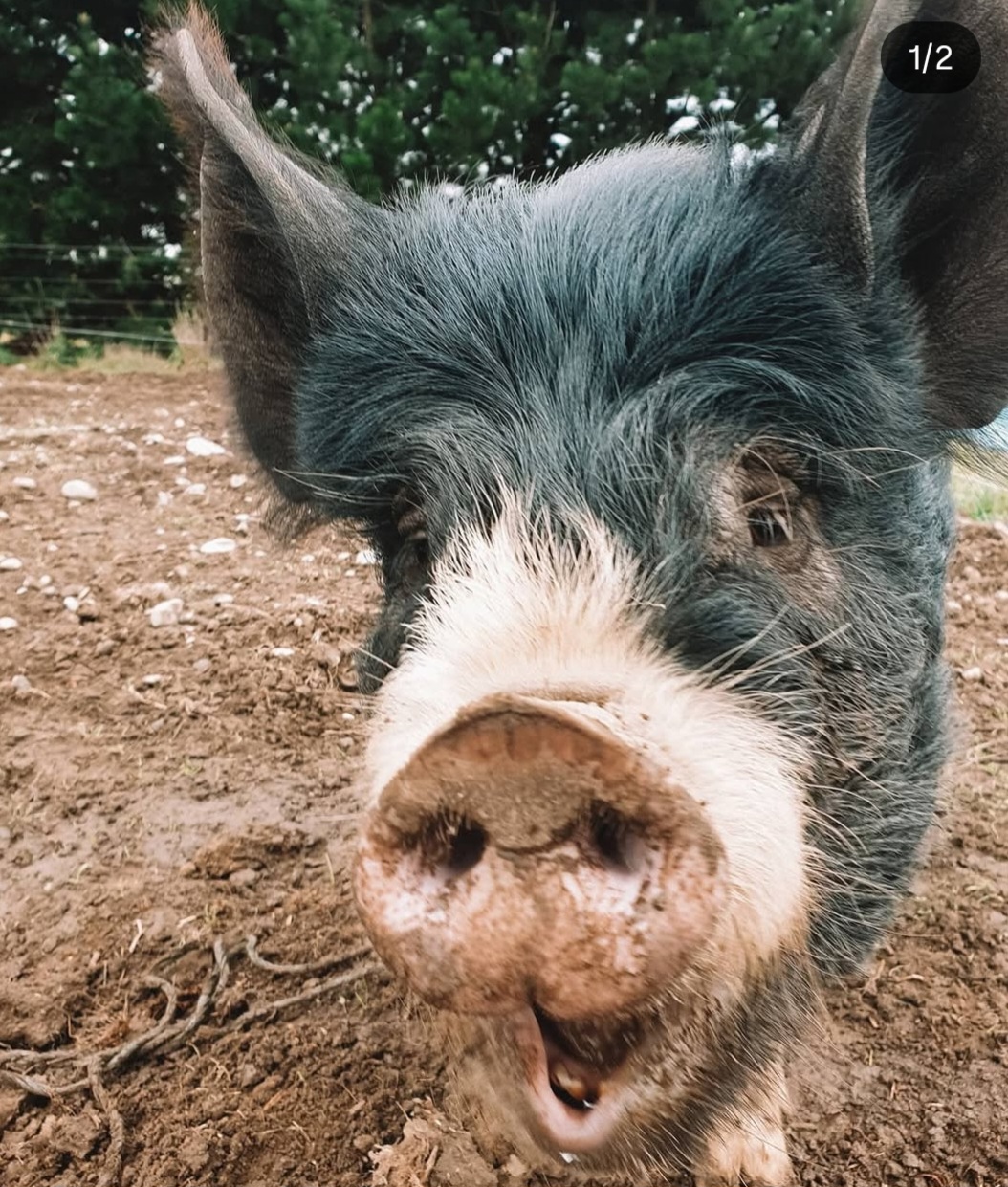
Maggie is our oldest girl and, I have to admit, my favourite. She is now around six years old and absolutely enormous — I swear she must be well over 300kg.
Despite being a very, very big pig, Maggie is still a total sweetheart. One of her favourite things is rolling over for a belly scratch.
Yes, even our giant old Berkshire wants a tummy rub.
Feeding Berkshire Pigs on Our Lifestyle Block
Like any large animal, pigs eat a lot.
And as feed costs have increased, the cost of keeping pigs has definitely become something we think about more carefully.
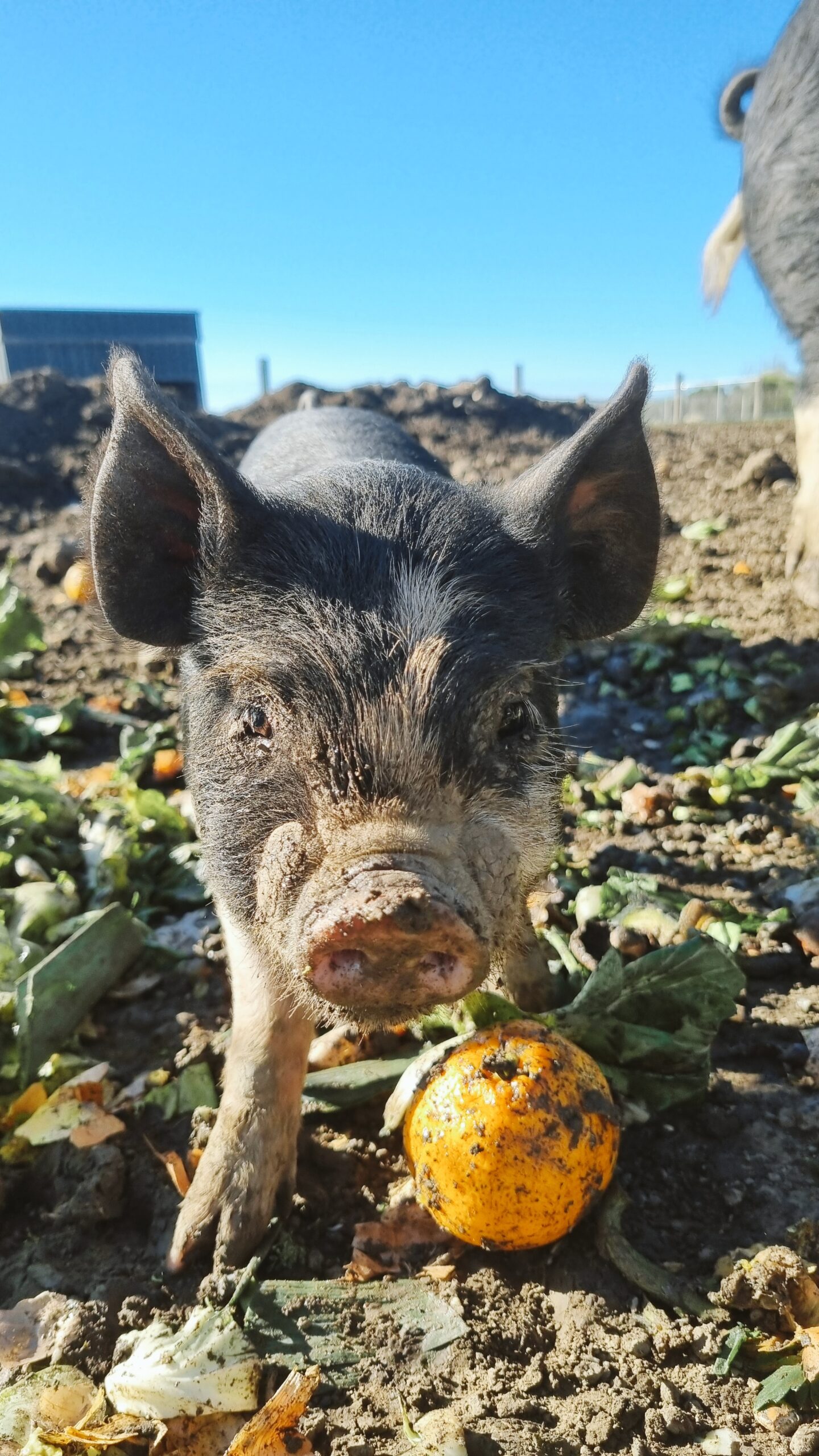
Fortunately, Berkshires are good grazers, so we make use of the pasture available to us. We rotate our pigs through a few smaller paddocks rather than keeping them in one area permanently.
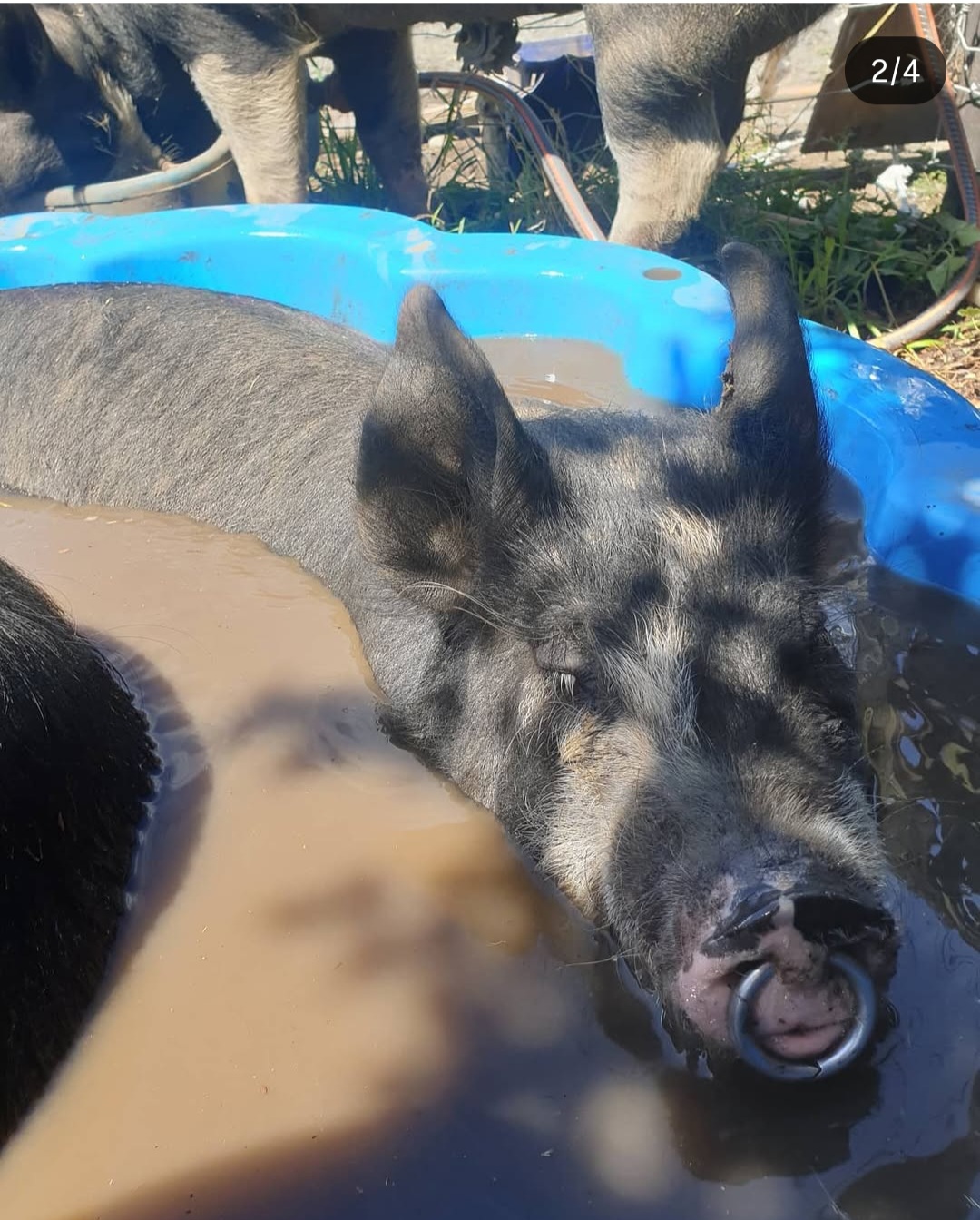
They can make damage though as pigs love to dig! Nose rings do help and we used nose rings on our sows and boar when they were young. They have since fallen or ripped out (healed well though, don’t stress!) and we haven’t re-ringed. It does mean though that in winter we don’t let them graze as much as the mess they make just wrecks the paddocks and prevents our other stock from getting in there.
We supplement their diet with scraps from our local supermarket, and their main source of feed is NRM Big Pig Nuts.
The combination works well for our setup, although feeding needs will vary depending on the age, size, stage of production and condition of the individual pig.
Our pigs are big animals, so there is no getting around the fact that they have big appetites. But having access to pasture and being able to rotate them through different paddocks is something we really value on our lifestyle block.
Are Berkshire Pigs Good for a Lifestyle Block?
For us, absolutely.
Berkshires have worked particularly well with the way we run our lifestyle block, but they aren’t a low-maintenance animal.
Before getting pigs, you need to consider things like:
- Secure fencing
- Reliable access to water
- Shelter and shade
- Paddock space and rotation
- Feed costs
- Veterinary care – Lepto vaccines are a big thing we are wary of
- Farrowing and piglet management
- What you will do with your piglets
- Processing and freezer space if you’re raising pigs for meat
They are also incredibly strong animals. A cute little piglet doesn’t stay little for long, and a full-grown Berkshire can move a surprising amount of dirt!
For us, though, their temperament, grazing ability and the quality of the meat make them a really rewarding animal to have on our lifestyle block.
Selling Berkshire Piglets as a Side Hustle
Another reason we got into breeding Berkshire pigs in the first place was to make a little bit of pocket money while also keeping some beautiful homegrown pork in the freezer. Once our piglets are around eight weeks old and fully weaned, we start selling them.
How much do Berkshire piglets cost?
We currently sell our fully weaned Berkshire piglets for $150 each at around eight weeks old, or $120 each when someone takes two or more.
When we first started out, we sold our piglets for around $100 each, which was a nice little side income from something we were already doing on our lifestyle block. These days, with the cost of feeding pigs having gone up and demand for our piglets staying strong, we sell them for $150 each. If someone is taking two or more, we usually drop the price to $120 per piglet. It’s certainly not something we’d ever describe as a get-rich-quick scheme — pigs eat a LOT! — but for us, it’s been a great way to make a bit of extra money, offset some of the costs of keeping our breeding girls, and still have a few of our own Berkshire pigs heading off to the freezer each year.
Raising Berkshire Pigs for Our Own Freezer
While we have bred Berkshire pigs for our local community, we also normally keep two or three piglets each year for our own freezer.
This is one of our favourite parts of raising them.
Berkshire pork is known for its marbling and rich flavour, and we’ve found the meat from our own pigs to be absolutely beautiful.
We’ve also found that our Berkshires aren’t excessively fatty when butchered, although the final carcass will depend on things like genetics, age, sex and how the pig has been fed and finished.
There is something particularly satisfying about raising an animal from birth and eventually filling your freezer with meat from an animal you’ve cared for yourself.
What We’ve Learned From Six Years of Raising Berkshire Pigs
Six years of breeding Berkshires has taught us that keeping pigs is equal parts rewarding, messy, expensive, funny and completely unpredictable.
We’ve learned that litter sizes can vary dramatically, that older sows don’t necessarily perform like they did in their prime, and that having multiple sows can be incredibly helpful when one has a large litter.
We’ve learned that pigs eat a lot — especially when you’ve got several big breeding animals!
We’ve learned that good paddock rotation makes a difference and that having animals that are calm and easy to handle is incredibly important when you’re raising them alongside children.
And we’ve learned that pigs have far more personality than we ever expected.
Our girls have grown up around these animals. They’ve helped feed them, pat them and watch countless litters of piglets arrive. They’ve seen the highs of a huge healthy litter and the heartbreak that inevitably comes with losing an animal or having to toss squashed piglets.
That’s the reality of raising livestock.
Would We Raise Berkshire Pigs Again?
Six years in, we still love our Berkshires.
We’ve had four sows and a boar, raised piglets for families in our local community, dealt with unexpected losses, watched our breeding animals grow older and kept plenty of pork in our freezer.
We’ve also had a Berkshire sow end up on Country Calendar, which is definitely not something we expected when we started!
But for us, the biggest thing is still the animals themselves.
Maggie rolling over for a belly scratch despite being approximately the size of a small car pretty much sums up why we love them.
Berkshire pigs have become part of our family lifestyle block, and we’re very grateful for everything they’ve taught us along the way.
If you’re considering raising Berkshire pigs in New Zealand, do your homework, make sure you’re prepared for the realities of keeping large livestock, and talk to breeders and other lifestyle-block owners about their experiences.
But if you have the space, the infrastructure and the willingness to embrace a little mud and a lot of pig feed, we can certainly understand why Berkshire pigs have become such a favourite on lifestyle blocks like ours.